

No Confidence In Sumitra Mahajan-“Why So Biased, Madam?”
Office of Speaker has struggled to operate independently from the party that she belonged to previously.
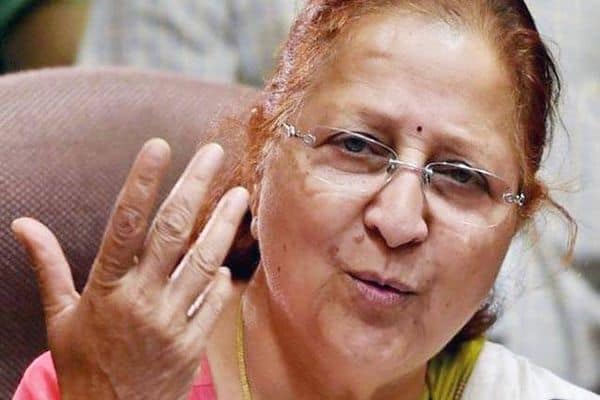
The last session of Parliament saw several failed attempts at admitting the motion of no confidence in Lok Sabha- it was claimed that disruptions made it difficult to ascertain the support of 50 MPs, every single time that it was brought up. Therefore, it came as a surprise to many that, during the very start of this Monsoon Session, the motion of no confidence was not only accepted by the Speaker, but also scheduled for discussion within two days.
For the Opposition, a motion of no confidence is a means by which it can bring to light the failed promises and unanswered questions of the government of the day. It is the responsibility of a right thinking government to respond and reassure the House of its commitment to its policy priorities and good governance. It is this spirit of debate and discussion that the Speaker of the House was required to protect and promote, yesterday.
One that she failed at.
Allocation of time
Understandably enough, the time allocated to every party is based on its strength in the House. However, the Speaker has the discretion to manage time in order to ensure that the proceedings of a no-confidence debate are upheld in spirit as much as in its letter. This should necessarily allow for representatives from every party to have their say. Even if this means shaving off the time allocated to the ruling party by say 10-15 minutes.
Especially towards the end of the evening, the Speaker was seeing allocating the “one-minute” slots to several MPs who also happened to be the sole representatives of their parties. For instance, newly elected RLD MP from Kairana was seen pleading to be given more time, or that her party’s position would go unrepresented. It was late in the day, agreed, but I would have preferred to listen to her for a few more minutes, instead of the history lesson on the Gandhi family that we were made to endure, for over an hour.
Mr. Farooq Abdullah, a senior Parliamentarian, whose maiden speech this also happened to be, was also unceremoniously interjected and interrupted by the Speaker, only to be told that he can have his say another day. He sat down but not before reminding the House that he was an Indian and not Pakistani. An unfortunate but necessary caveat in today’s times.
Despite the apparent time crunch and chaos leading up to the PM’s speech in the house (which conspiracy theorists say was timed for the 9 pm prime time slot), BJP MP Anurag Thakur was allowed to read out a hasty second clarification to the Rafale deal remarks, while the PM stood awkwardly behind, awaiting his turn. This, after the Defence Minister, had been permitted to make a detailed response earlier.
Selective use of the rulebook
Lok Sabha has often fallen prey to selective and often confusing implementation of the Rules of Procedure, and yesterday was no different. For instance, during Rahul Gandhi’s speech, the mention of the Rafale deal lead the treasury benches to indulge in hissing and name calling. The Defence Minister looked thunderous and demanded that she be allowed to respond to the “defamatory” remarks, to which Parliamentary Affairs Minister, Ananth Kumar, invoked Rule 353 of the LS Rules of Procedure (prohibiting any defamatory or incriminating allegations without prior notice).
While the Speaker did permit the remarks to be made (the public interest clause in 353, perhaps), she also gave the Minister adequate time to respond to the remarks, including reading out loud from several documents, unverifiable at the time. Mr. Venugopal, an INC MP, reminded the Speaker later in the day that the documents were not laid on the table of the House, by the Minister. But this was lost in the din. Also lost and forgotten was Rule 349 which contains a long list of rules to be followed by Members in the House (including prohibition of ‘giving running commentary’, hissing, and shouting slogans).
Non-uniform standards of conduct
On the point of slogan shouting, when the TDP MP, Mr. Kesineni, who was making his closing remarks before his motion of no confidence could be taken up, was unable to continue over the heckling and sloganeering from the treasury benches. The Speaker was seen urging him to carry on anyway- “Tum bhi toh kar rahein the”, she reminded him. Both sets of actions of sloganeering should have been checked, but weren’t. She was also quick to shut him up earlier on his “what a performance it was”, “Bollywood blockbuster” remarks on the PM’s speech. He was told to stick to facts and policy issues, or that he would not be allowed to speak.
While this could be deemed to be fair, it seemed particularly discordant after the two-hour long speech of the PM, most of which was spent tracing the Gandhi family tree and how each member of the family had looted this nation. Other painful memories include the “mein tumhari maa jaisi hoon and hence I can be condescending” remark made by the Speaker to a third- term Member of Parliament.
It is only understandable that such conduct prompted Mr. Kesineni to retort, “why are you so biased Madam”.
This isn’t the first time that the conduct of this Speaker has come under scrutiny. Hasty passage of Bills in the lower house; certifying of ordinary bills such as the Aadhar Bill as a Money Bill (which curtailed the powers of RS beyond making non binding recommendations); permitting the inclusion of non tax proposals in Finance Bills, year after year, point towards a worrying fact – that the Office of Speaker has struggled to operate independently from the party that she belonged to previously.
However, like the judiciary, the Office of the Speaker is a high constitutional body- one that is vested with vast and somewhat unchecked powers in the House. Therefore, it is not enough for the Office of the Speaker to claim to be independent. What is equally important is that she is seen to be independent as well. After yesterday’s events, Mr. Kesineni’s “why so biased, Madam”, continues to be the popular sentiment.
Prianka Rao is a lawyer and policy analyst based in New Delhi.