

Why The Balakot Airstrike Was a Blunder For India. Former ADG, BSF Explains
India executed a one-time action and had no intentions of escalating any further. To an adversary, this is a sign of weakness.
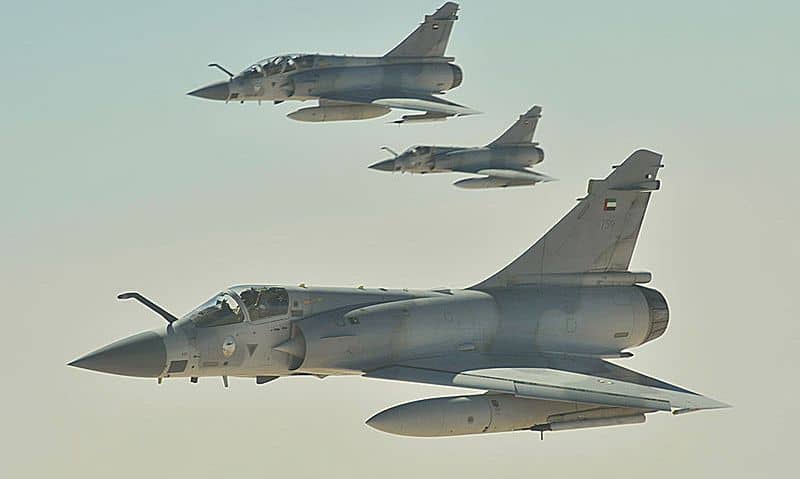
Wing Commander Abhinandan walked back to India; his head held high 60 hours after his plane was shot down in Pakistan-Occupied Kashmir. Most people, by now, are privy to the chronology of events leading to his capture and subsequent release. The propaganda videos released by Pakistan authorities reveal the highest standard of poise, grace and patriotism displayed by him while in captivity.
Irrespective of the political motives attributed to the party in power and the courage displayed by Abhinandan and other armed forces personnel, the government must answer some questions about the long- and short-term objectives of such precipitative action. And I am not even referring to the alleged political motives being attributed to the party in power.
Did the strikes avenge the 49 CRPF soldiers who were killed in Pulwama? What was the objective of the Balakot airstrike and has that objective been achieved? Did the authorities consider all aspects before initiating the air strikes?
Unfortunately, answer to all of the above is “No”.
The strikes were aimed at “teaching” Pakistan a lesson and conveying in no uncertain terms that India would not take things lying down — the premise being that Pakistan is solely responsible for the tragedy at Pulwama. Pakistan undoubtedly had a hand in the Pulwama tragedy. It has been sheltering and aiding the head of Jaish-e-Mohammad, fomenting trouble in Kashmir and inciting violence against Indian security forces. However, the strategic community is guilty of not discussing intelligence, operational and leadership failures in the name of presenting a united face in the aftermath of the “colossal tragedy” in Pulwama.
Why do such repeated intelligence failures keep occurring with painful regularity? Why do troops fail to react appropriately in such cases and suffer heavy causalities without any visible damage or loss to the adversary?
It is no consolation that perpetrator — the suicide bomber — was identified soon after the tragedy, and as claimed by the corps commander, all the others associated with the bombing were neutralised within 100 hours of the tragedy. This, of course, will not bring back to life the CRPF personnel who lost their lives and who were perhaps the only breadwinners for their families. More importantly, if all this could be achieved in a short while after Pulwama, why was that intelligence not available before the tragedy?
I do not know if airstrikes aimed to drown the voices asking these uncomfortable questions in the cacophony of the heightened flavour of nationalism and patriotism, but they certainly seem to have done that.
We as a nation need to get our act together and learn from the mistakes of Pulwama. We need to bring out our intelligence apparatus out of their slumber to ensure such lapses do not occur in future. We need to ensure our security forces are appropriately equipped and trained to react appropriately in such contingencies.
The Indian Air Force did exceptionally well to execute the tasks allotted to it effectively. But did we achieve the strategic objective of subduing Pakistan and forcing it to abandon the terrorist organisation it shelters on their land? The events after the airstrike indicate otherwise. Pakistan was quick to retaliate with its own version of strikes in broad daylight, ambushing the IAF and luring them to their own air space; that led to one aircraft being shot down and the capture of a pilot. They are continuously resorting to ceasefire violation on the border since the day of strikes displacing thousands of families residing in the vicinity of the border.
Imran Khan sounded menacing while addressing the nation when he asked whether consequences have been thought out. He further asked where the events would finally lead to. It is in this context that the statements and articles declaring that airstrikes have called the “nuclear bluff” of Pakistan are amusing. Pakistan is a state which sponsors terrorism, and it is not going to stop that any time soon. Pakistan is riding a tiger called terrorism, and it is tough for it to get down from it unless persuaded through a combination of carrot and sticks by the international community.
Finally, taking an analogy from the game of Bridge, India has shown a weak hand in advance, both during the surgical strikes in 2016 and the airstrikes now. If one recalls, the Director General of Military Operations (DGMO) in a press conference the day after the surgical strike in 2016, emphasised that the DGMO of the Pakistani Army had been informed about the strikes. In the press briefing by the Foreign Secretary after the airstrikes, the emphasis was on declaring the attacks as “non-military”.
The message in both cases is clear to discerning analysts — India has executed a one-time action and has no intentions of escalating any further. To an adversary, this is a sign of weakness. There was no way that Pakistan would not retaliate if that were the message conveyed. Imran Khan had no alternative, hamstrung as he is by the overarching authority of the Pak Army.
The Pak Army could not have afforded to lose face in front of its population. Therefore, Pakistan retaliated to the strikes in its own manner.
Our think tanks and strategic thinkers must learn to analyse all aspects before initiating any action whose consequences are unpredictable. We must learn from our history and remember what Field Marshal Sam Manekshaw told Indira Gandhi when she asked him to attack Bangladesh immediately. I am sure that there is a lesson in it for us.
Sanjiv Krishan Sood is a Retired Additional Director General of Border Security Force. Having put in over 38 years of meritorious service he has served along all the borders of our country with Pakistan and Bangladesh including eight years on LC, and in the sensitive Samba Sector of J&K. A security analyst, his interests include Border Management, issues of topical interest, the role of security forces in Security Matrix of India, politics and humour. He tweets at @sood_2
Also read: An Ex-Indian Armed Forces Officer Explains Why Modi Govt’s Kashmir Policy is a Sham