

You know nothing (about Faiz), Vivek Agnihotri
Listen to Faiz; and always remember: “lekin ab zulm ki miyaad ke din thode hai, ik zara sabr, ki fariyaad ke din thode hain” (The days of tyranny are however numbered now. Hold on for a while, for now you do not have to suffer for long)
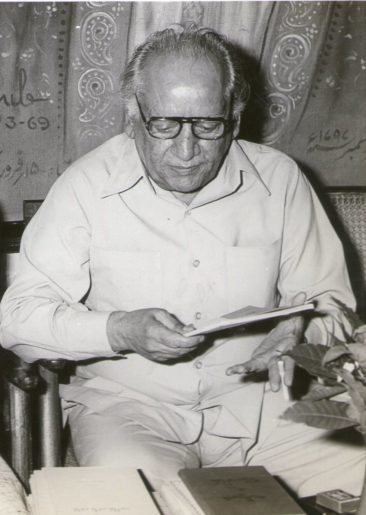
“Hum dekhenge
Laazim hai ki hum bhi dekhenge
Vo din ki jiska vaada hai
Jo lauh-e-azal mein likha hai”
B-movie director Vivek Agnihotri, stellar intellectual that he is, recently tweeted a couple of lines from Hum Dekhenge, one of the most iconic poems of Faiz Ahmed Faiz, a well-known Marxist, as a caption to a picture of a statue of Lenin being destroyed in Tripura. Agnihotri got defensive after he was called out and responded by saying his tweet was sarcastic.
This enrages admirers of Faiz such as myself. Faiz, the revolutionary poet, and intellectual who wrote poems against all forms of oppression. Hum Dekhenge, the nazm Agnihotri quoted, was written in response to Pakistani dictator General Zia-ul-Haq’s repressive laws that went as far as to impose a ban on wearing sarees. Hum Dekhenge, in my opinion, is among his most powerful poems, it stands as a promise that the oppressor will someday be defeated, if not today, then tomorrow and a day will come when “mountains of injustice” will “blow away like cotton.”
One year after the death of Faiz, Iqbal Bano, a celebrated ghazal singer performed this nazm in Lahore in front of an audience of 50,000 people and she did so, donning a black saree. If one listens to the recording of this performance, one can hear the crowds shout ‘Inquilab Zindabad’ (Long Live the Revolution)
My rendezvous with Faiz began 3 years ago. I was introduced to his legacy and work by a dear friend from Kashmir. I remember instantly falling in love with not only his verse, but through his verse, his language, Urdu. Soon I was running a group that held open-mics once a month called ‘Bol’ named after his poem “Bol ki labb aazaad hain tere”
You see, Faiz was not just a poet, his pen yielded unimaginable amounts of magic, and he had the power to leave you in rapture that lasted hours if not days. His poems are so rooted in his own experiences and yet when you read a sher like “Tum aaye ho na shab-e-intezar guzri hai, talaash mein hai sahar, baar baar guzri hai.
Junoon mein jitni bhi guzri ba-kar guzri hai, agarche dil pe kharabi hazar guzri hai”
(Neither have you come, nor has the night of waiting passed
The dawn is hovering around, and has repeatedly for you asked.) [Translation by Kuldip Salil]
at a certain time of the day, when nostalgia overtakes you, you can almost imagine an old lover whispering these words to you, that’s what Faiz does, he transforms his individual experiences or thoughts into something that each of us have felt, he makes it something more, something greater.
His poem ‘Chand Roz Aur Meri Jaan’ makes readers want to believe that these treacherous, tyrannous days shall not last long, after all. When my angst against the political scenario gets too much, I look for solace in his verse.
I began turning to his work like one does to an old friend. He cured me of all ailments. I read, listened and recited his verse, I read out his work to my father when he was hospitalized and we bonded over one particular nazm called Mauzu-e-Sukhan which goes like this-
“Gul hui jaati hai afsurda sulagti hui shaam
Dhul ke niklegi abhi chashma-e-mahtab se raat
Aur mushtaaq nigaahon ki suni jaayegi
Aur un hathon se mas hongay yeh tarse hue haath.”
(The evening, sad and russet, is setting fast
And soon, the night, bathed in the springs of the moon, will burst forth
My eyes will have their wish fulfilled
While my longing hand will hold her hand.) [Translation by Kuldip Salil]
For a while, he was everywhere, his poetry on my whiteboard, his pictures on my creative writing portfolios, his words on my lips especially when I was a little buzzed, I remember subjecting my cousin to a night of listening to me recite Faiz endlessly. We were sitting by the pool and in that stillness “Gulon mein rang bhare” came wafting into my head, we talked about the people that we loved in the past and how the meaning of love changed and so did we along with it.
Faiz makes me feel things that I never even thought I had the emotional range to feel, he opens up these boxes inside my head that I constantly try to shy away from, and when I do go through the contents of those boxes, while listening to his wondrous voice recite his poems, there is nothing more cathartic than that.
When your circumstances test you, when you feel chained by them, when a regime starts deciding things for you that you don’t want them to stick their noses into, when they decide what you eat, read or watch, when they do things that trample upon your belief that this world can be fixed, when they shove lies down the throats of most people and all everyone does is stand and stare, read Faiz. Listen to Faiz; and always remember: “lekin ab zulm ki miyaad ke din thode hai, ik zara sabr, ki fariyaad ke din thode hain” (The days of tyranny are however numbered now. Hold on for a while, for now you do not have to suffer for long) and always always, “Speak up, for you are the master of your tongue” and please, gift books of his poems to all those you love while you’re at it! (I strongly recommend “Best of Faiz Ahmed Faiz” translated by Kuldip Salil if you wish to have his original work alongside a translation or if not then, “The Colours of My Heart” by Baran Farooqi is a must have.)
So my dearest, bigoted filmmaker, please refrain from using Faiz’s poems out of context, because frankly, it makes you sound like a bigger idiot than you already are.
Arushi is a 19 year old who writes about what makes her disgruntled or ecstatic. She strongly believes that it’s fab not flab.